
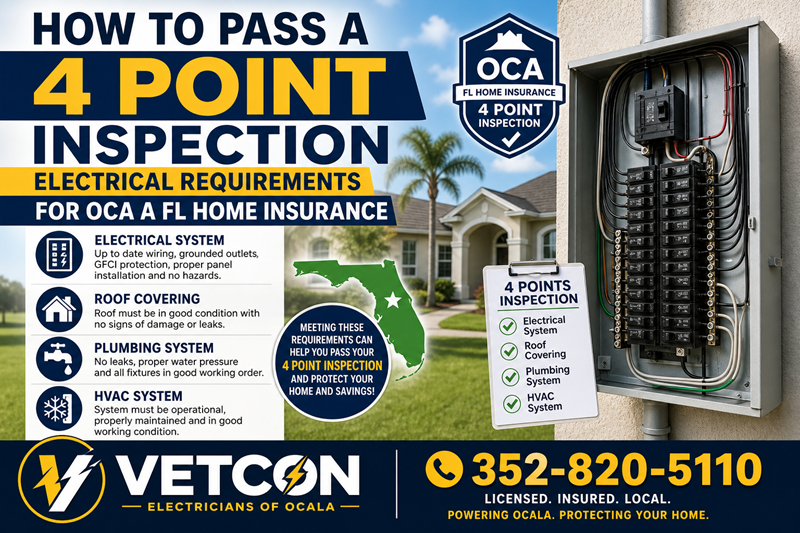
If you own an older home in Ocala or Marion County—especially in high risk states like Florida, where insuring an older house often requires additional scrutiny—your insurance company likely requires a 4 point home inspection before issuing or renewing your policy. A 4 point home inspection, also known as a four point inspection, is commonly required to evaluate the major systems of your property. The electrical portion of this inspection trips up more homeowners than any other system. Here’s what you need to know to pass the first time.
Key Takeaways
- Insurance companies in Florida typically require a 4-point inspection for homes that are 15 years or older to assess the condition of major systems (also known as the main systems) such as the roof, electrical, plumbing, and HVAC, specifically for insurance purposes.
- Federal Pacific Electric (FPE) and Zinsco/Sylvania panels, aluminum branch wiring, double-tapped breakers, and missing GFCI protection are the most common reasons homes fail the electrical portion.
- A 4-point inspection evaluates four major systems in a home: the roof, electrical system, plumbing system, and HVAC system.
- Hiring a licensed Ocala electrician for a pre-inspection check before scheduling your formal 4-point inspection dramatically improves your approval odds.
- Vetcon Electricians of Ocala specializes in 4-point and insurance-driven electrical upgrades—call 352-820-5110 for help.
What Is a 4-Point Inspection in Florida?
A 4-point inspection is a visual evaluation that insurance companies require to assess insurability risks in older Florida homes. Unlike a comprehensive home inspection (also known as a full home inspection) that examines the entire property, this focused review covers only the four systems: roof, electrical, plumbing, and HVAC. The inspection specifically assesses the age, condition, and useful life of these systems.
The purpose of a 4-point inspection is to identify potential risks associated with the major systems of a home, which helps insurance companies determine the insurability of older properties. In Florida, a 4-point inspection is often required for homes that are 30 years old or older when applying for or renewing an insurance policy, as these homes may present higher risks due to aging systems nearing the end of their useful life.
For Ocala, Belleview, and Silver Springs homeowners, a clean 4-point report is usually required before a new policy is issued or renewed. The inspector provides a detailed report on the four systems, which helps insurers determine insurance coverage and whether the home can meet insurance requirements. The inspection doesn’t check structural integrity or pests—it’s limited to age, condition, and safety hazards of these four major components.
Why Electrical Systems Matter for Home Insurance Approval
Insurance companies focus heavily on the electrical portion because outdated systems are a leading cause of residential fires. According to NFPA data, faulty electrical systems contribute to approximately 13% of U.S. residential fires annually. Homes with high risk factors or systems in poor condition increase the likelihood of claims, so insurers scrutinize every panel and wire.
During a 4-point inspection, inspectors look for signs of wear, damage, and safety hazards in the roof, electrical, plumbing, and HVAC systems. Typical red flags that cause insurers to deny coverage or restrict policies include:
- Obsolete panels from brands like Federal Pacific and Zinsco
- Aluminum wiring from the 1960s-1970s
- Knob and tube wiring in older houses
- Obvious amateur or DIY electrical work
- Overloaded circuits and missing safety devices
A poor electrical report can result in higher premiums, insurers may require repairs within 30-90 days, or outright policy denial. Insurance companies may deny coverage or require repairs if a home has serious roof damage, outdated wiring, plumbing leaks, or an inefficient HVAC system, as these issues can compromise the home’s ability to withstand hazards.

Electrical Requirements to Pass a 4-Point Inspection in Ocala, FL
While a 4-point isn’t a full NEC code inspection, most inspectors use current National Electrical Code standards with Florida amendments as their safety benchmark. The electrical inspection focuses on the brand of the panel, the type of wiring, and overall safety compliance.
The main areas evaluated are the service panel, wiring type, connections and junctions, and safety devices. Inspectors look for obvious signs of damage or improper installation in all visible components, which should appear professionally installed, properly labeled, free of overheating, and reasonably up to date.
Updated Electrical Panels
The main service panel receives intense scrutiny. Federal Pacific (FPE) and Zinsco are commonly flagged brands that may lead to automatic failure in home inspections due to safety defects. FPE panels, produced from the 1950s-1980s, fail at rates up to 25-35% in testing. Zinsco panels have failure rates exceeding 50% in independent tests.
Most Florida carriers will not bind coverage if an FPE or Zinsco panel is present. Replacement with a modern panel is typically required. New policies typically require a minimum electrical service of 100 amps.
Acceptable modern panels include Square D, Eaton, Siemens, and GE, sized appropriately for the home—commonly 150-amp for homes under 2,500 sq ft or 200-amp for larger residences. Panels should be:
- Securely mounted with proper main disconnect
- Legibly labeled with no missing circuit identifications
- Free of rust, burn marks, or corrosion
- Equipped with intact dead-front covers
Proper Wiring Standards
Wiring type and condition significantly affect results. Aluminum wiring, common in homes built from the 1960s to the 1970s, often requires certified remediation or replacement to meet insurance standards. The thermal expansion of aluminum differs from copper by about 40%, causing loose connections and potential arcing at terminations.
Knob and tube wiring, found in very old homes, is typically considered uninsurable until replaced. This wiring lacks grounding and overload protection, using degraded rubber and paper insulation that cannot support modern appliances.
Modern copper wiring with properly sized breakers passes easily if undamaged and correctly terminated. Specific issues that can lead to a failed inspection include exposed wires, mixed metals without proper connectors, scorched insulation, or non-permitted rewiring. All electrical wires must terminate properly in a junction box without being exposed in the attic or walls.
Safe Electrical Connections
Inspectors examine the quality of terminations inside panels, junction boxes, and throughout the home. The presence of double-tapped breakers (two wires in one breaker) can lead to a failure during inspection. This violates most panel UL listings and creates arcing risks.
Common hazards that get flagged include:
- Open junctions without covers
- Missing box covers or cable clamps
- Loose or hanging cables
- Non-protected NM cable in garages
Every splice should be inside an approved junction box with proper wire nuts and strain reliefs. Signs of overheating—discolored outlets, melted insulation, or panels warm to the touch—are serious issues that almost always prevent passing.
GFCI and AFCI Protection
Ground Fault Circuit Interrupters (GFCI) protect against electrical shock by interrupting ground faults in milliseconds. Properly functioning Ground Fault Circuit Interrupters (GFCI) must be present in wet areas such as kitchens, bathrooms, and around pools. This includes laundry areas, garages, unfinished basements, and all outdoor receptacles.
While an older home may not have been built with GFCIs, many insurers want these upgrades completed before approving coverage. Arc-Fault Circuit Interrupter (AFCI) protection for bedroom and living areas in newer installations is viewed favorably, though not always required for retrofits.
Homeowners should test GFCI outlets before inspection and replace any that won’t trip and reset properly.
Common Electrical Issues That Cause Inspection Failures
Many Ocala homes fail the 4-point specifically because of electrical defects rather than roof or plumbing alone. When a home fails the inspection, it often means it does not meet the minimum standards required for insurance coverage. Electrical issues cause 25-35% of 4-point failures statewide.
Common reasons homes fail a 4-point inspection include roofing problems, outdated electrical systems, plumbing issues, and deficiencies in HVAC systems. Other issues such as visible leaks, water damage, and missing shingles are also frequent causes of inspection failure in other systems. Specific electrical problems include:
- Obsolete FPE or Zinsco panels
- Cloth-insulated or aluminum branch wiring
- Lack of GFCI outlets in required locations
- Overloaded circuits evidenced by frequent tripping
- Open junction boxes and DIY wiring
Non-permitted additions like enclosed porches or detached sheds often reveal substandard electrical feeds. Visible corrosion or water intrusion into meter cans is a major concern in Florida’s humid climate. Address these known issues before scheduling your formal inspection.

How to Prepare Your Home Before a 4-Point Inspection
Preparation is the fastest way to pass the electrical portion the first time. The process involves three steps: getting a professional pre-check, completing repairs, performing small repairs, and organizing documentation.
Most work can be completed within days to a few weeks, depending on the extent of improvements needed. Addressing any visible issues, such as leaks or damaged wiring, prior to the inspection can help improve the chances of passing the 4-point inspection. As part of preparation, check that the HVAC system blows both hot and cold air, and ensure that heating and air conditioning are working properly.
Schedule a Pre-Inspection Electrical Check
Have a licensed electrician perform a focused safety check before ordering the official 4-point inspection. During a pre-check, the electrician identifies issues likely to be cited—outdated panels, missing GFCIs, or overloaded circuits.
Vetcon Electricians of Ocala can walk your home with the same checklist most insurance inspectors use. This approach prevents multiple inspection visits and costly repairs after an initial failure. Homeowners should ensure that the inspector has easy access to the roof, electrical wiring, plumbing, and HVAC equipment by clearing any obstacles or clutter that might hinder their exploration.
Make Necessary Electrical Repairs or Upgrades
Common upgrade actions include:
- Replacing FPE or Zinsco panels with modern 150- or 200-amp service
- Adding GFCI outlets where required
- Correcting double-tapped breakers
- Enclosing open junctions
Insurance companies may require repairs if issues are found during the inspection before they will issue or renew a policy.
Address obvious safety hazards first—scorch marks, flickering lights, or tripping breakers. If aluminum branch wiring is present, options include full rewiring or approved repair methods like COPALUM or AlumiConn connectors. All work should be performed by a licensed electrician, with permits pulled through the City of Ocala or Marion County Building Department.
Gather Documentation for Insurance Companies
To prepare for a 4-point inspection, homeowners should collect relevant documentation related to roofing, electrical, plumbing, or HVAC system repairs, maintenance, or upgrades. Documentation of repairs and electrical upgrades should be kept to assist in securing an insurance policy during the inspection process.
Useful documents include:
- Electrical permits and final inspection approvals
- Invoices from licensed electricians
- Manufacturer information for new panels or devices
Having documentation ready allows the inspector to note upgrades accurately. For panel replacements done in 2024-2026, include completion dates and contractor license numbers on the 4-point form.
Cost of Electrical Repairs for 4-Point Inspection Compliance
In the Ocala area, expect these approximate ranges for 2026:
Repair Type | Estimated Cost |
|---|---|
Panel upgrade (150-200A) | $2,500–$5,000 |
GFCI installation (6-10 outlets) | $300–$800 |
Double-tap corrections | $200–$500 |
Minor wiring defects | $500–$1,500 |
Full copper rewire (2,000 sq ft) | $10,000–$25,000 |
The cost of a 4-point inspection typically ranges from $50 to $300, depending on factors such as location, size, and age of the home. In Florida, the average cost of a 4-point inspection can vary from $100 to $300. These inspections and any required repairs are often necessary when renewing policies, as insurance companies want to assess the risk and condition of the property before continuing coverage. Additionally, a wind mitigation inspection may be needed to evaluate your home’s resistance to wind damage, which can help you qualify for insurance discounts. While electrical repairs are upfront expenses, they prevent insurance denial and may qualify you for better coverage terms. Checking smoke alarms and carbon monoxide detectors to ensure they are working and have fresh batteries is an important safety step before a 4-point inspection.
Why Hire a Licensed Electrician in Ocala, FL
Electrical work tied to insurance eligibility is not a DIY project. Licensed and insured electricians understand current Florida Building Code, NEC requirements, and insurer expectations in Ocala.
Using an unlicensed handyman can result in a failed inspection, denied claims, and redoing work at additional cost. A reputable local electrician handles permit pulling and coordinates municipal inspections. Verify license status through the Florida DBPR and choose contractors with a track record in 4-point remediation projects.
Vetcon Electricians of Ocala – Your 4-Point Inspection Experts
Vetcon Electricians of Ocala is a veteran-owned electrical contractor focused on helping homeowners pass insurance-driven inspections throughout Ocala, Summerfield, Dunnellon, and Marion County.
The team routinely replaces unsafe panels, installs required GFCI and AFCI protection, corrects DIY wiring, and prepares homes to exceed insurer expectations. Vetcon understands the forms and photos underwriters want to see, allowing for faster approvals and fewer follow-up requests.
Call Vetcon Electricians of Ocala at 352-820-5110 to schedule a pre-inspection check or get needed electrical repairs completed.

Frequently Asked Questions About 4-Point Inspections in Ocala
These FAQs address common concerns beyond the main article content, specific to Florida and Ocala practices as of 2026.
When undergoing a 4-point inspection for OCA A FL home insurance, what systems are evaluated?
A 4-point inspection focuses on four main systems: electrical, plumbing, HVAC, and roofing. The roof inspection is crucial, as inspectors assess the roof’s age, condition, and remaining useful life to determine if it meets insurance requirements. Additionally, the water heater is evaluated as part of the plumbing system to ensure it is safe, efficient, and compliant with building codes. The inspection results are compiled into a detailed report for insurance purposes, which helps determine eligibility for insurance coverage.
Can I pass a 4-point inspection with an old electrical panel?
Age alone doesn’t fail a panel. However, brands like Federal Pacific and Zinsco, heavy rust, missing covers, or clear overheating will likely cause failure. Many Ocala homes built before the 1980s pass if the panel is a safe, recognized brand, properly sized, and in good condition. Certain insurers require a 4-point inspection for homes over 20–30 years old to ensure electrical systems are in safe working condition. Have a licensed electrician evaluate your panel before scheduling.
How long is a 4-point inspection valid in Florida?
There’s no single statewide rule, but most insurers accept reports less than one year old at application or renewal time. Some carriers accept reports up to two years old if no major changes occurred, while others require fresh reports for each policy change. Check with your specific insurance company for current validity requirements.
Do I have to rewire my whole house to get insurance?
Full rewiring is usually only required when very hazardous systems are present, such as widespread knob and tube wiring or badly deteriorated aluminum branch wiring. Some insurers accept approved repair methods instead of full replacement but have strict guidelines. Consult both your insurer and a licensed Ocala electrician to understand what’s needed for your specific policy.
How quickly can electrical issues be fixed before inspection?
Minor corrections—adding GFCIs, fixing double taps, closing junction boxes—are often completed within a day or two. Larger projects like full panel replacement may take several days to two weeks depending on permit processing. Contact an electrician early if you’re facing policy deadlines, which often allow 30-90 days for costly repairs.
Is passing a 4-point the same as being fully up to electrical code?
No. Passing a 4-point means the home meets minimum safety expectations for insurance, not full compliance with the latest National Electrical Code. Some older but safe conditions may pass even if they wouldn’t be installed that way today. If you’re planning major renovations, use the 4-point as a starting point, then work with an electrician to bring critical areas fully up to modern code.
Final Tips to Pass Your 4-Point Inspection
Electrical issues are the top driver of 4-point failures in older Ocala homes—address them first. Don’t wait until your insurer issues a cancellation or non-renewal notice. Schedule evaluations and repairs proactively, especially if your home is an older property with older systems.
Work with experienced, local, licensed electricians who understand Florida insurance standards and 4-point forms. The investment in proper electrical upgrades protects both your insurability and your home’s safety.
Contact Vetcon Electricians of Ocala at 352-820-5110 to get electrical issues resolved and position your home to pass its 4-point inspection on the first attempt.
